Opinion Weekend
September 27-28, 2025
NPR-Ipsos poll: Americans don’t broadly support Trump’s National Guard deployments
Debbie Elliott, NPR News
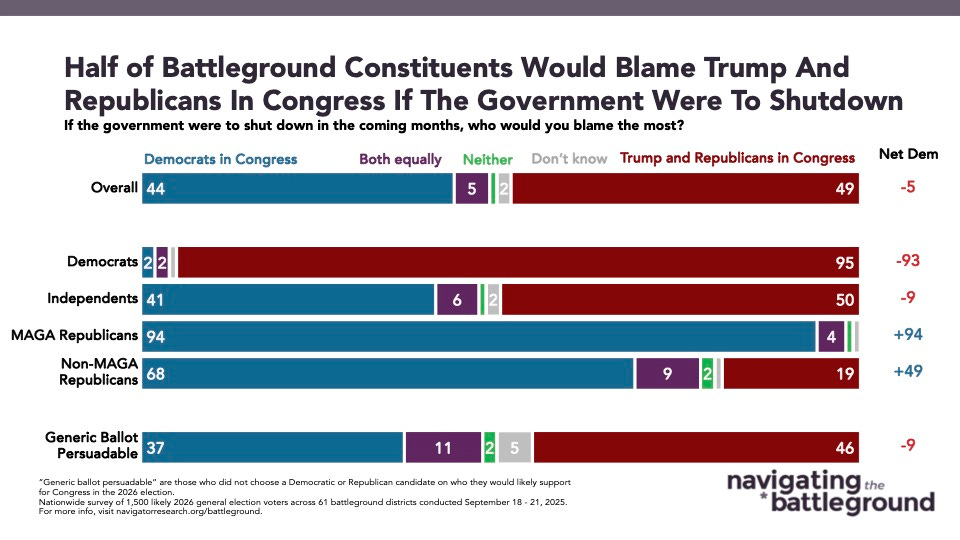
Americans are concerned about crime, but don’t broadly support President Trump’s deployment of the National Guard to police U.S. cities according to a new NPR-Ipsos law enforcement poll.
More than half of Americans say the country’s best days are already behind it
Ariel Edwards-Levy, CNN
In politics today, negativity is a much easier sell than enthusiasm. For the first time in nearly a decade of polling, more than half of Americans say the country’s best days are already behind it. Three-quarters think the country’s political system needs major reforms or a complete overhaul, according to CNN polling conducted by SSRS this summer.
See the five types of independents that have big implications for American politics
Jennifer Agiesta, Ariel Edwards-Levy, Annette Choi and Jeff Zeleny, CNN
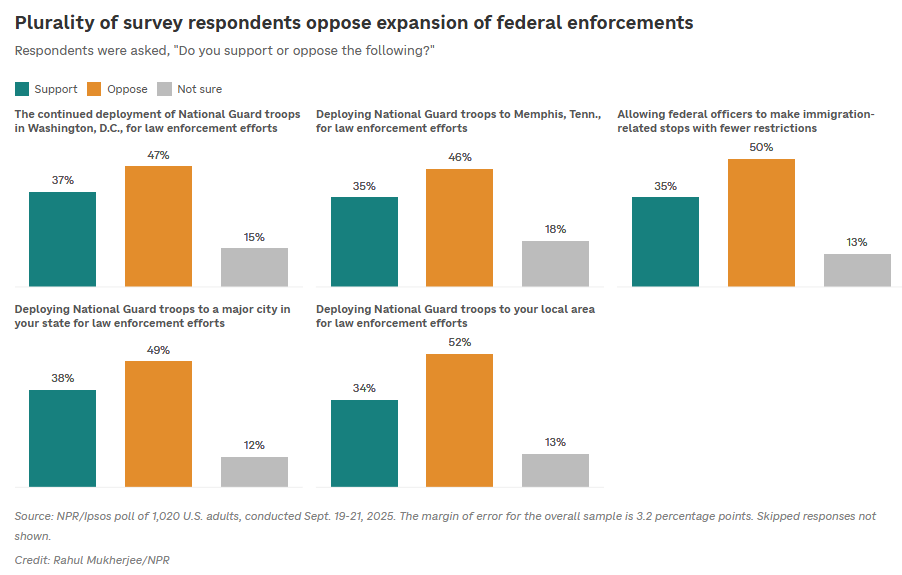
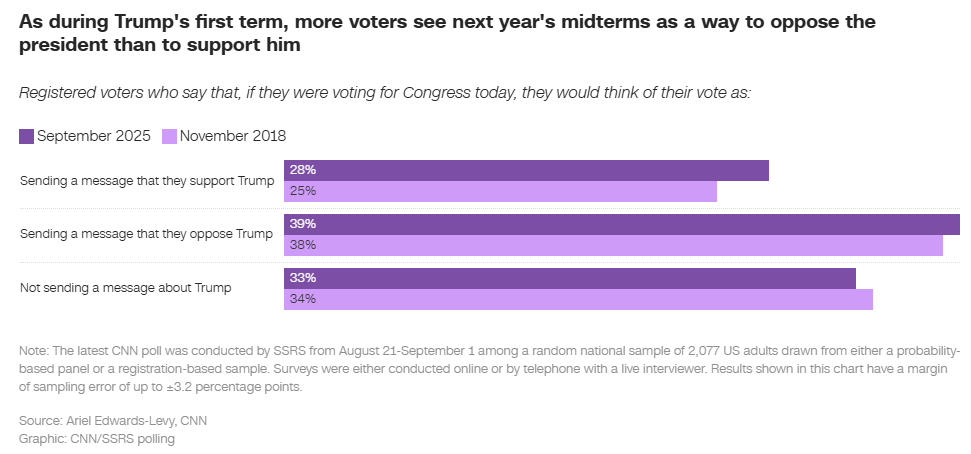
Picture an independent voter. You might be imagining someone who takes their time considering the candidates and their positions on the issues, who generally has faith in the political system, who sometimes votes for Republicans and sometimes for Democrats. But a new CNN poll taking a deeper look into who political independents are finds the notion of a classic swing voter is a thing of the past.
Disengaged voters are the key to winning future elections in the US
Jennifer Agiesta, CNN
A new CNN poll highlights the unique political challenges posed by different types of independents for the campaigns trying to reach them. Those who are the most open to both parties are among the least engaged with politics, while many of the more tuned-in are either reliably partisan or deeply negative toward both Democrats and Republicans.

The state of the political parties
Clifford Young, Ipsos
It’s far too early to know which party is “winning” or “losing” in the race to control Congress in 2026. However, even this far out from the 2026 Midterms, the political landscape that we’ll see next November is beginning to take shape. Where do the Republican and Democratic Parties stand in the eyes of the public?
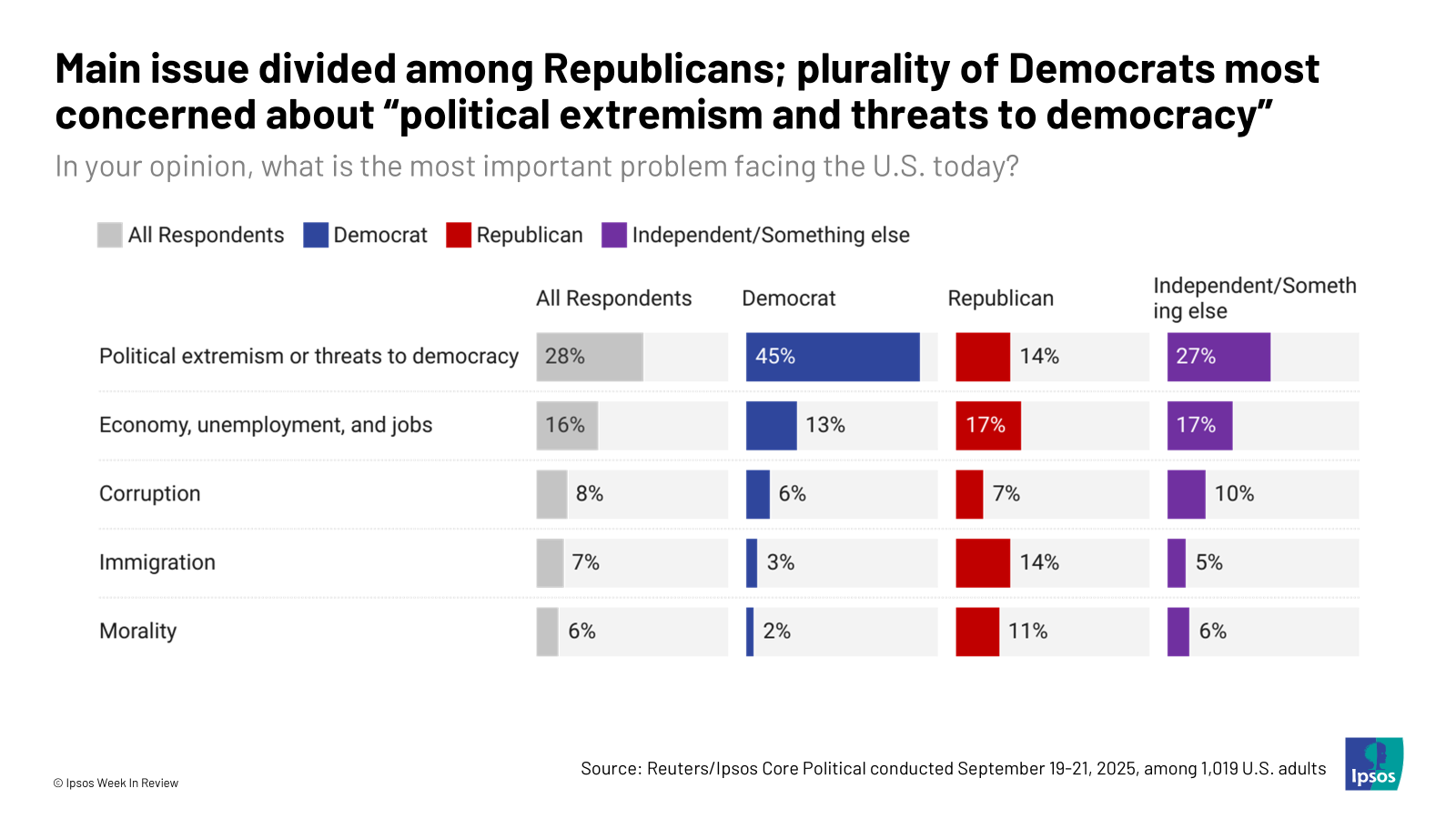
The State of Our Nation: Gauging Americans’ political opinions in 2025
19th News
This is the fourth annual poll from The 19th and SurveyMonkey, designed to shed light on what women, particularly women of color, and LGBTQ+ people think about the issues animating our politics.

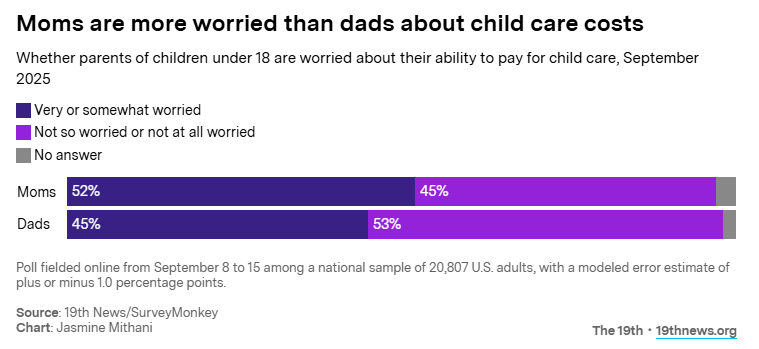
When it comes to rising costs, women are more worried than men — about everything
Chabeli Carrazana, 19th News
A new 19th News/SurveyMonkey poll found that women — especially women of color — were more worried about covering the cost of groceries, housing, medical bills, child care and rent.
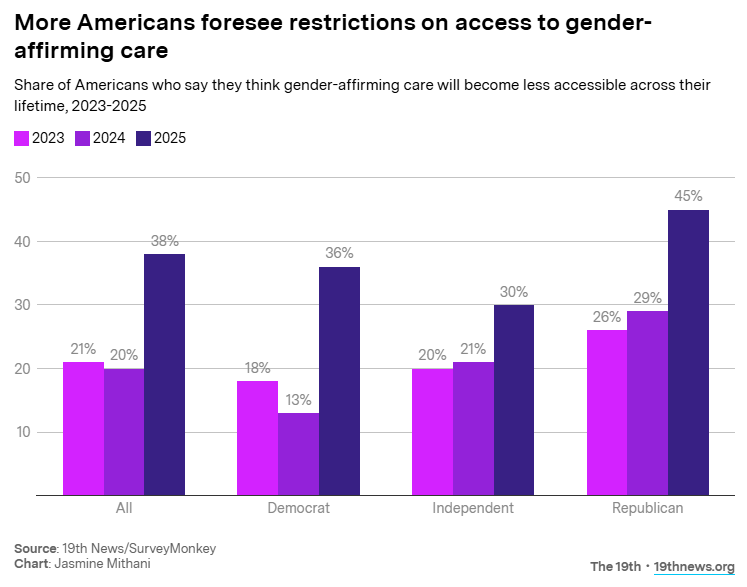
More Americans see a future where gender-affirming care will be harder to access
Orion Rummler, 19th News
A new 19th News/SurveyMonkey poll shows that the share of people who think gender-affirming care will get less accessible jumped to 38% from 20% in 2024.
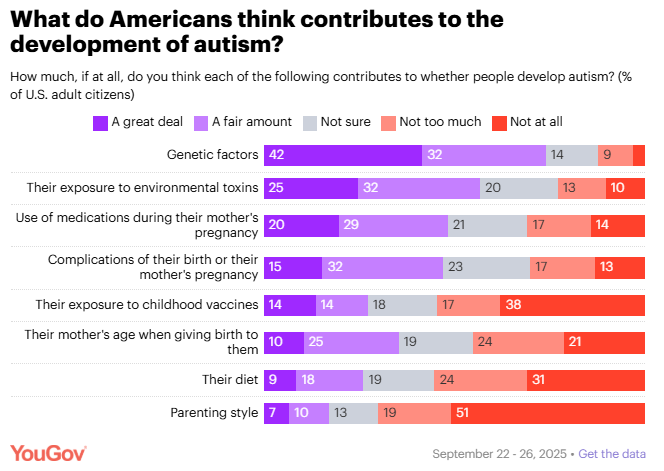
What Americans think contributes to pregnancy risks and autism
Taylor Orth, YouGov
Out of eight factors, Americans are most likely to say that genetics contributes a great deal or a fair amount to whether a person develops autism (74% say this). More than half (57%) say that exposure to environmental toxins does.
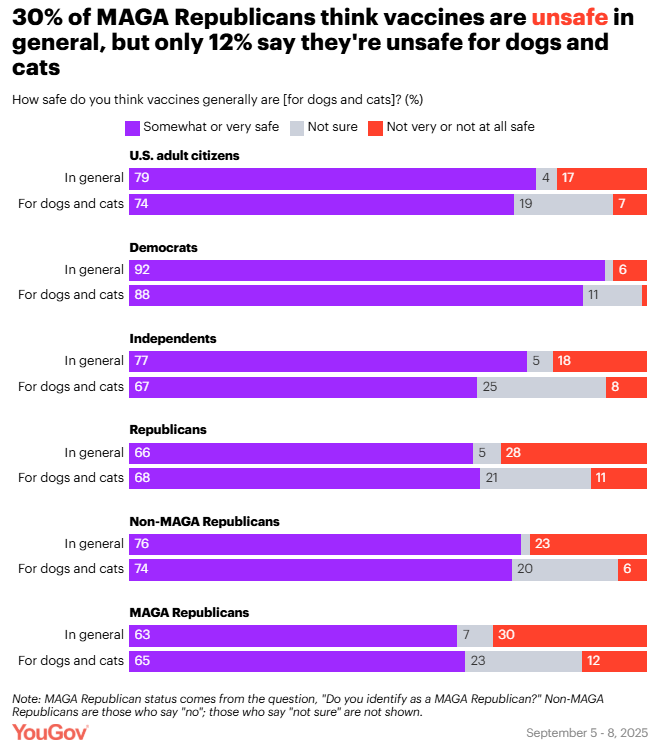
Vaccines for cats and dogs are politically polarized, too
Jamie Ballard, YouGov
A new YouGov survey on pets and vaccination finds that majorities of Americans — including majorities of Democrats and Republicans — believe that vaccinations for dogs and cats are safe. Self-identified MAGA Republicans are more likely than non-MAGA Republicans to hold negative views of vaccines, including their safety.
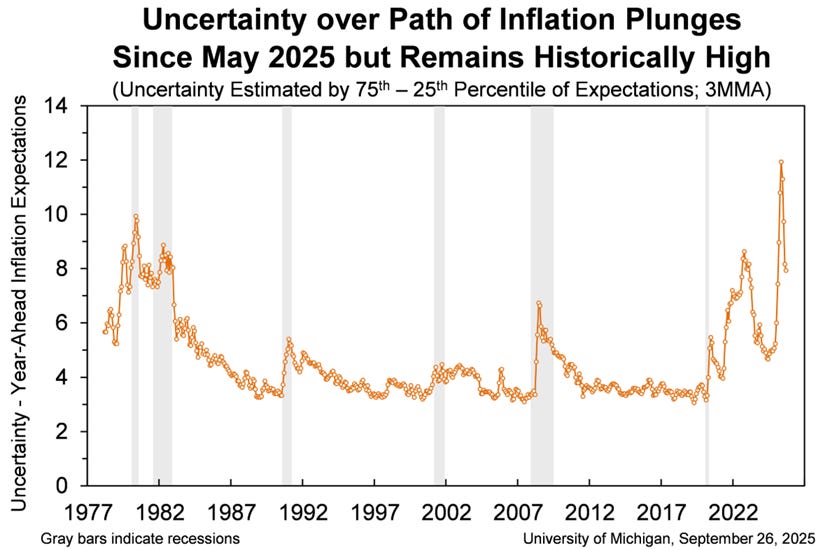
Consumer sentiment eased about 5% from last month
Joanne Hsu, University of Michigan
Consumer sentiment confirmed its early-month reading and eased about 5% from last month but remains above the low readings seen in April and May of this year. Although September’s decline was relatively modest, it was still seen across a broad swath of the population, across groups by age, income, and education, and all five index components.
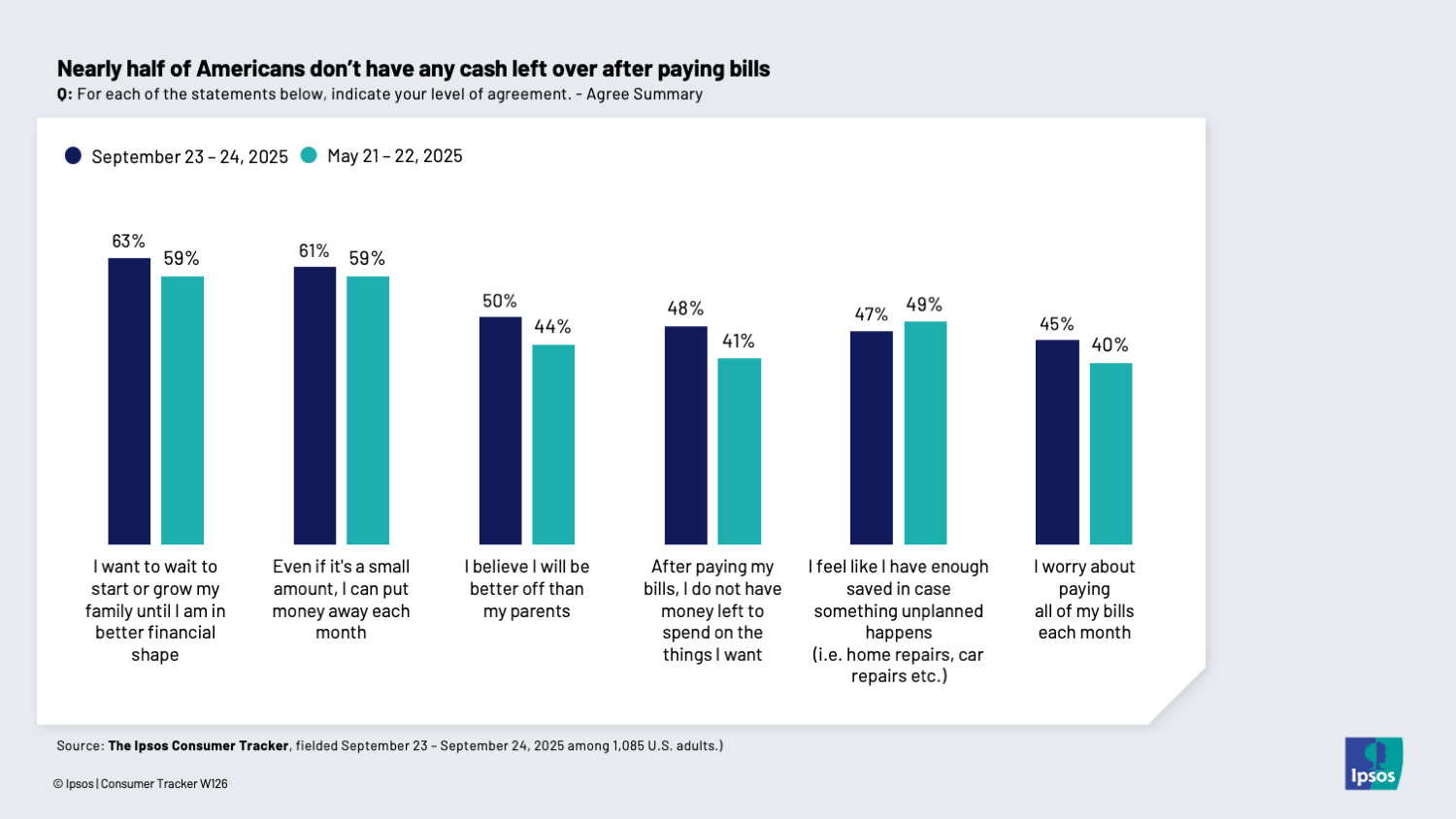
Nearly half of Americans don’t have any cash left over after paying bills
Matt Carmichael, Ipsos
The number of Americans who say that they don’t have any money left over after paying their bills is up to 48%, the highest it’s been since near-peak inflation in 2022, according to the Ipsos Consumer Tracker
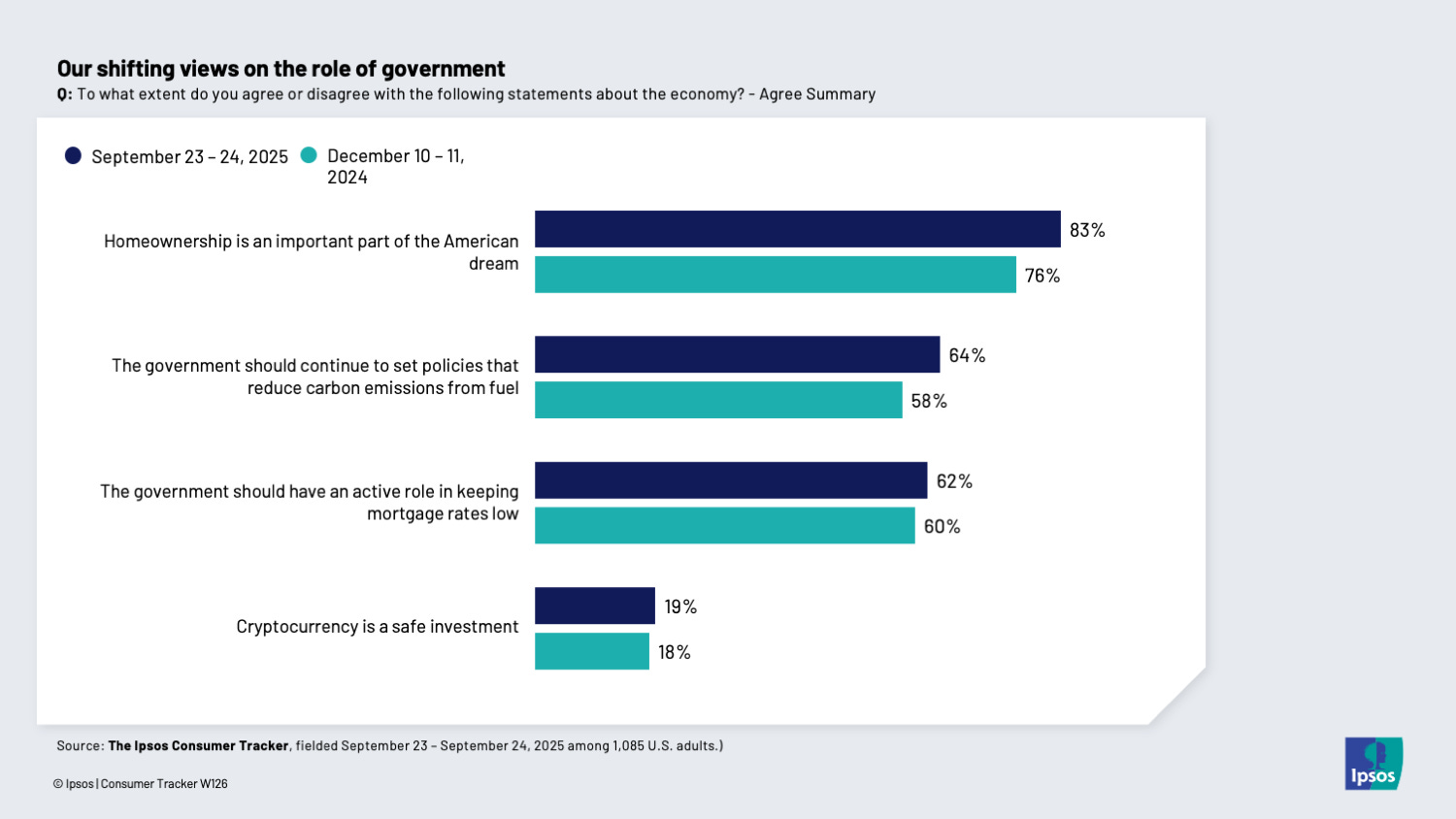
Americans’ views on the role of government are shifting
Matt Carmichael, Ipsos
The number of Americans who think homeownership is part of the American Dream is high and getting higher, according to the Ipsos Consumer Tracker
Americans are stressed but also hopeful. Here’s why both are possible.
Matt Carmichael, Ipsos
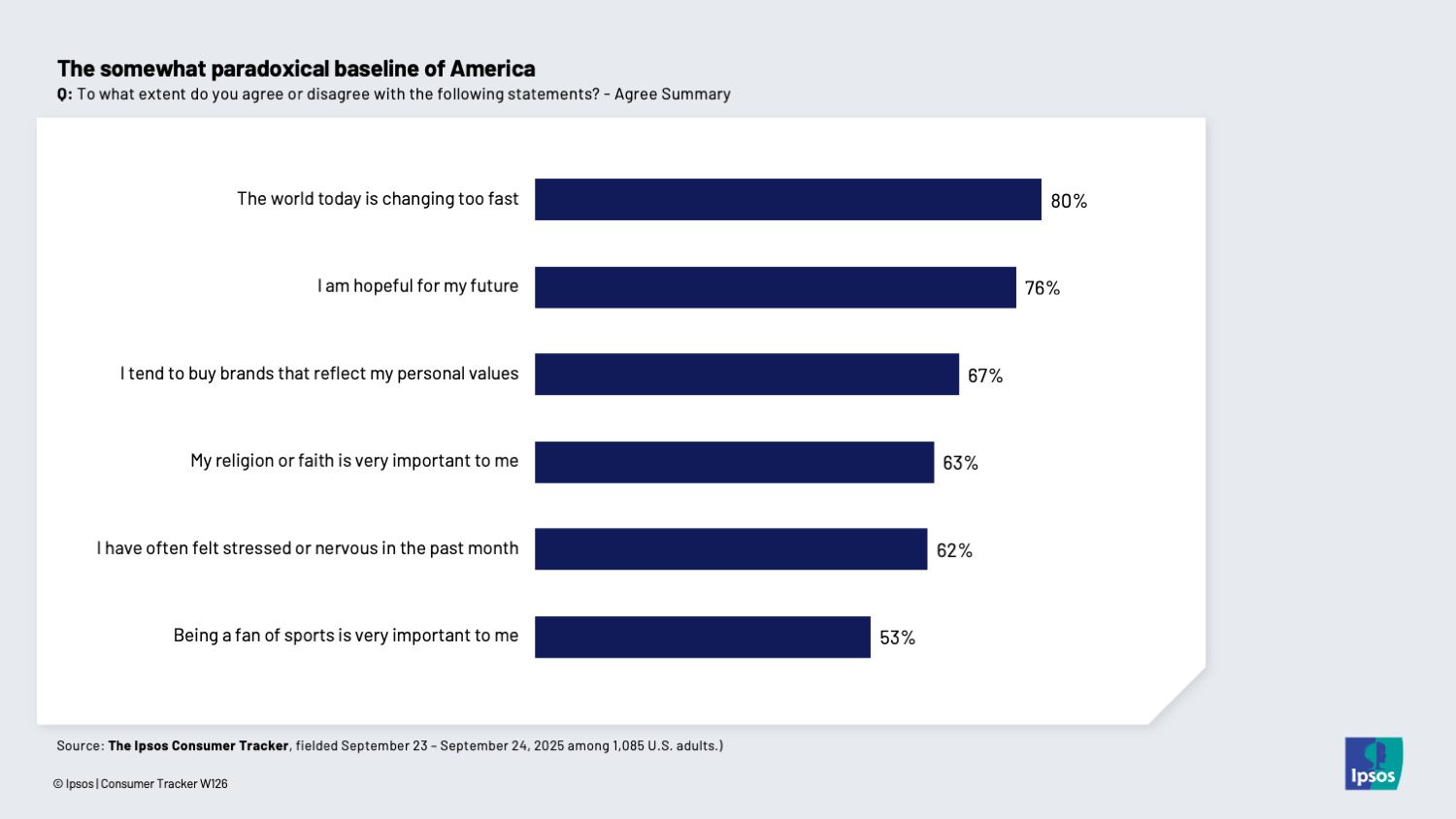
Eight in ten Americans say that the world is changing too fast, but 76% also say they’re hopeful for the future. Those aren’t as contradictory as they seem.
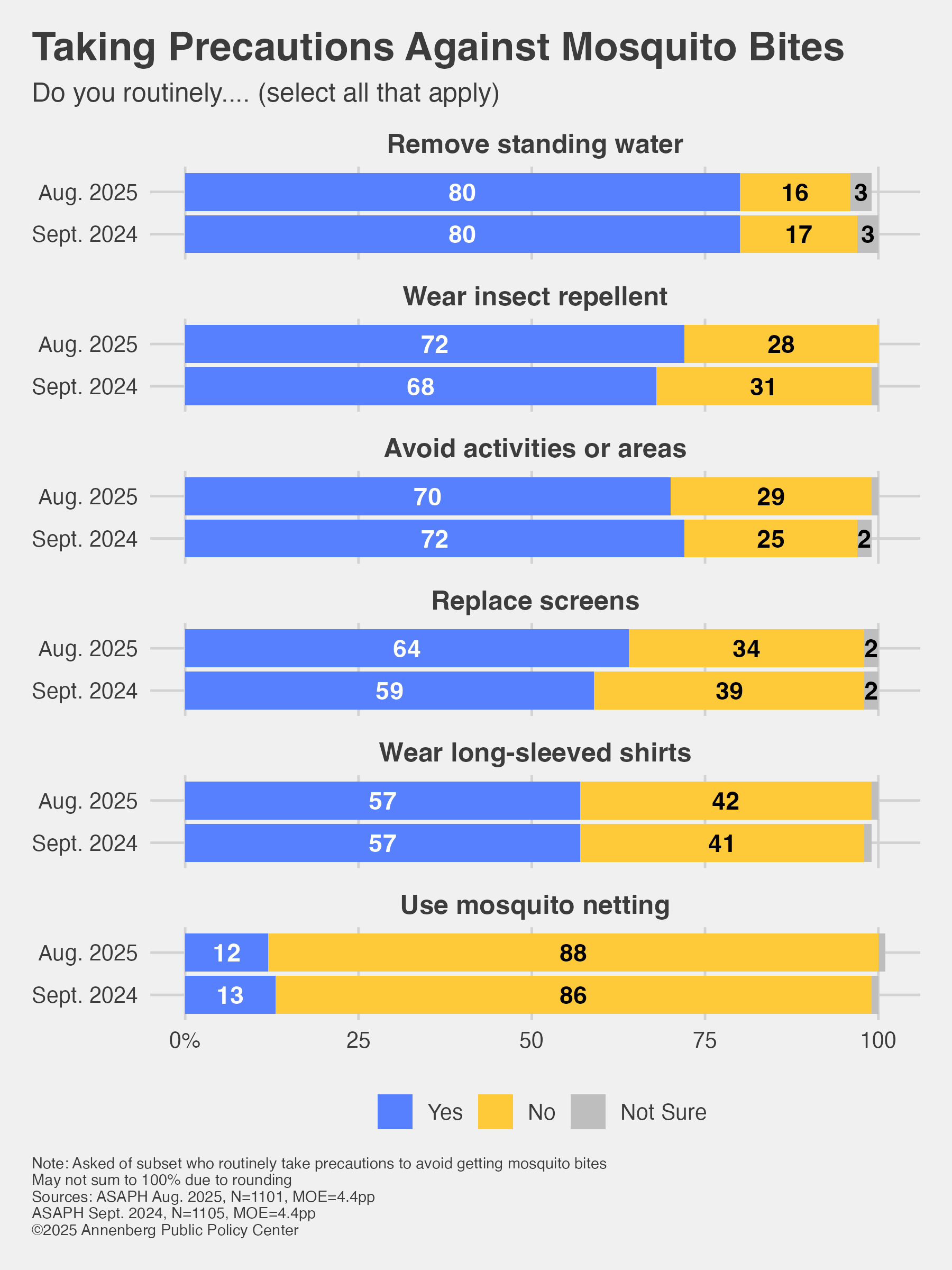
Despite Increase in U.S. Cases, Worry About West Nile Virus Remains Low
Annenberg Public Policy Center, University of Pennsylvania
Despite this season’s growing number of cases, relatively few Americans worry about becoming infected by West Nile or by dengue fever, another mosquito-borne illness, according to a survey of nearly 1,700 U.S. adults conducted August 5-18, 2025, by the Annenberg Public Policy Center of the University of Pennsylvania. Just 15% of respondents in the nationally representative panel report being worried that they or someone in their family will contract West Nile virus or dengue fever in the next three months.
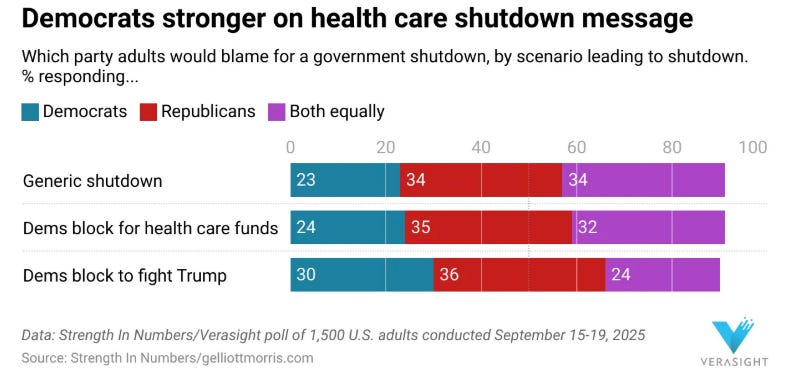
Voters say they’ll blame Republicans more for a government shutdown
G. Elliott Morris, Strength In Numbers
Our new Strength In Numbers/Verasight poll this week asked voters how they would react to three different hypothetical shutdown scenarios.
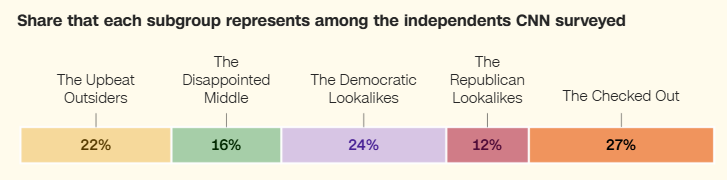
Americans in the Battleground Want Congress to Protect Health Care — Even If It Means Shutting Down the Government
Ian Smith & Erica Seifert, Navigator Research
• A majority of battleground constituents are aware of the potential shutdown, although few say they are hearing “a lot.”
• Initial blame lies with Trump and congressional Republicans, but messaging does little to break up partisan alignment.
• Medicaid, health care tax credits, and pushing back on tariffs are the main priorities for battleground constituents as they follow the shutdown fight.