Opinion Weekend
January 10-11, 2026
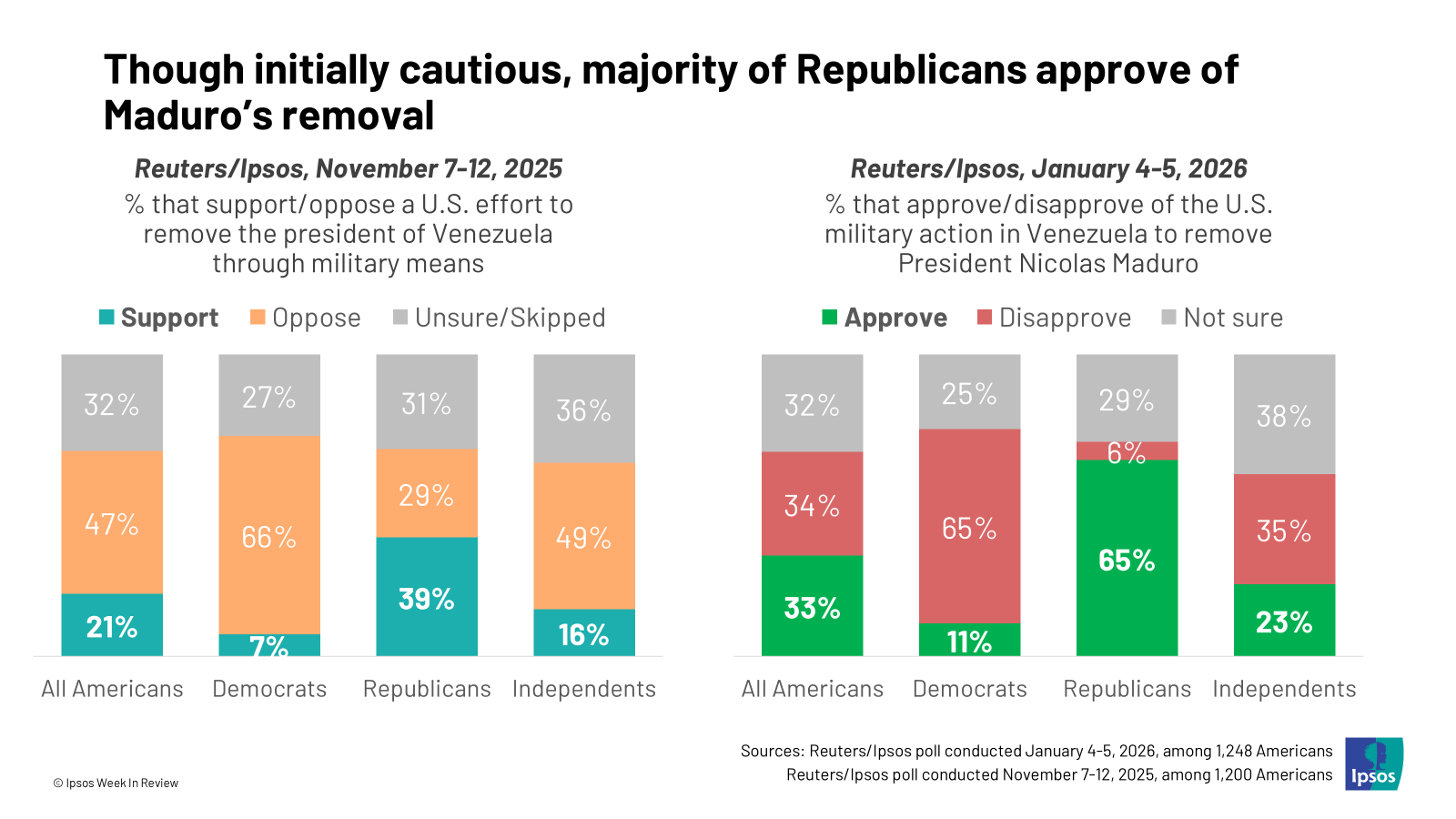
How Americans feel about the U.S. removal of Maduro
Clifford Young, Ipsos
Polling shows an American public that is divided along usual partisan lines about the strikes, where concerns over a drawn-out U.S. engagement exist alongside some optimism about the impact for Venezuelans.
Many Americans say the U.S. is not a moral leader but want it to be: NPR/Ipsos poll
Vincent Ni and Nick Spicer, NPR News
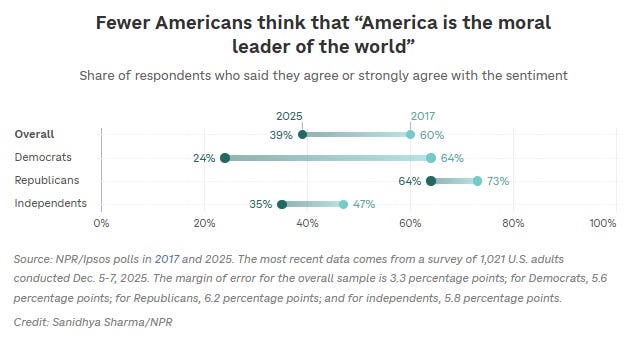
In the nationwide survey, 61% of respondents said that the U.S. should be a moral leader, but only 39% say it actually is one. That latter figure is sharply down from 60% in 2017 in a similar survey of American attitudes.
Most Americans say U.S. should be world's moral leader; far fewer say it is
Ipsos
A significant gap has emerged between Americans' aspirations and current assessments regarding U.S. moral leadership, according to a new NPR/Ipsos poll.

Calling Charlie Kirk a Martyr is Not Exactly a Unifying Message
Paul A. Djupe and Jacob R. Neiheisel, Religion in Public
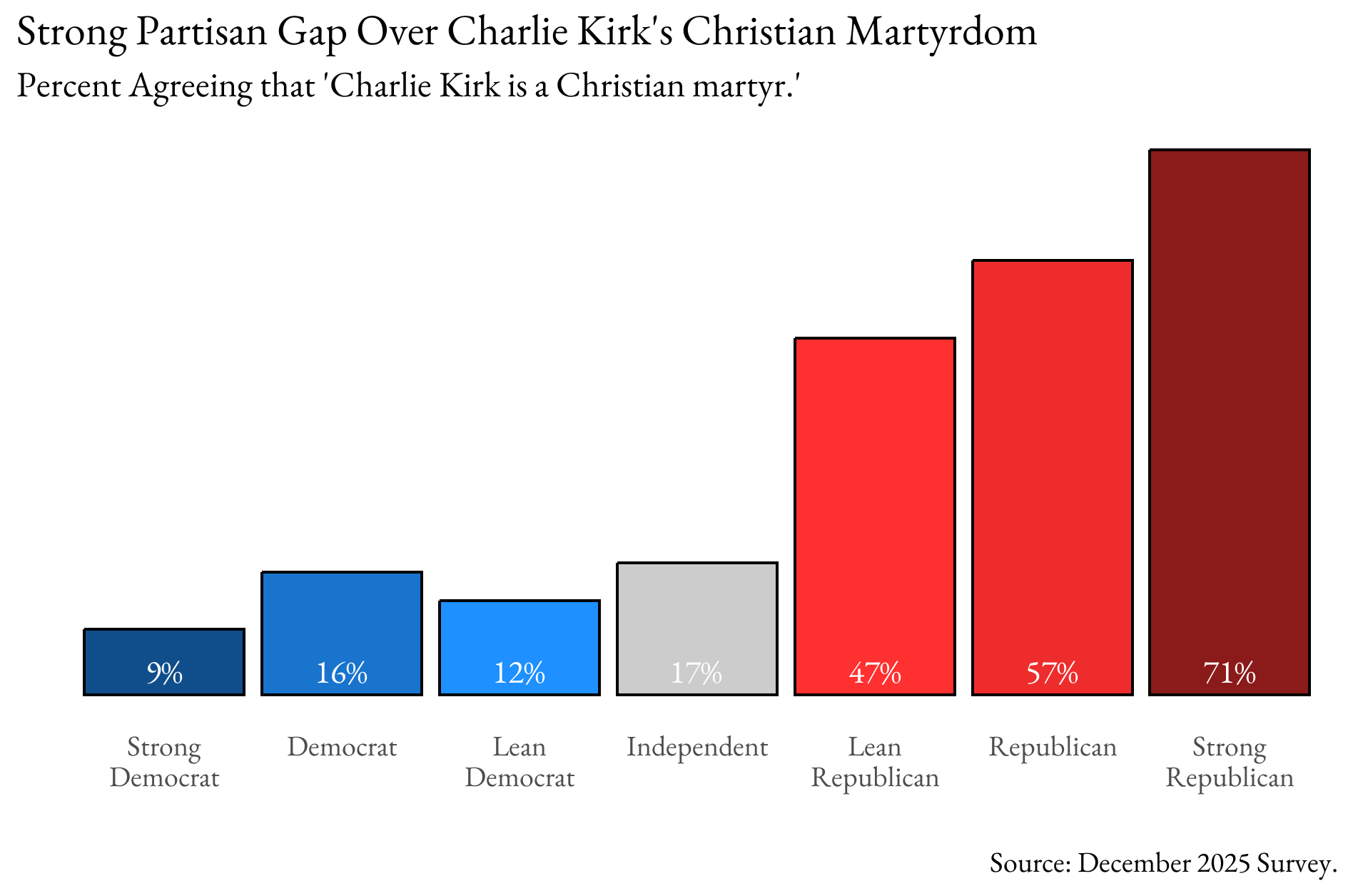
In our December 2025 survey of 2,000 American adults conducted through Verasight (and weighted), we asked a number of questions about Kirk, including whether respondents agreed or disagreed that “Charlie Kirk is a Christian martyr.”
Voluntary corporate efforts to address social problems have little or no effect on public support for regulation by government
LSE USAPP
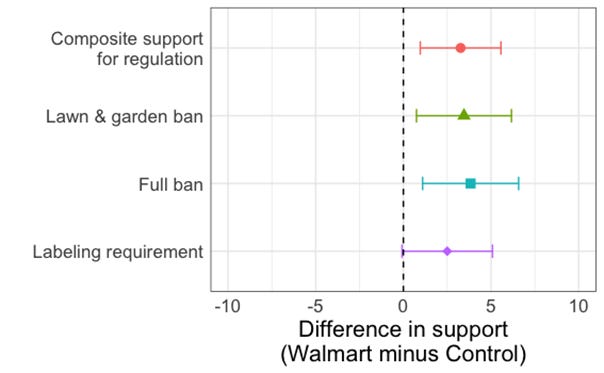
Do corporate efforts to address social problems affect public support for government regulation? Previous studies have given contradictory answers, so in new research, Hajin Kim, Joshua Macey and Kristen Underhill tested the effects of realistic scenarios based on actual company pledges on public support. They find little evidence to support the concern that companies’ voluntary efforts to address social problems will have a meaningful impact on public support for government regulation.
Texas: Health care prices top voters’ economic worries
Jim Henson and Joshua Blank, Texas Politics Project, University of Texas
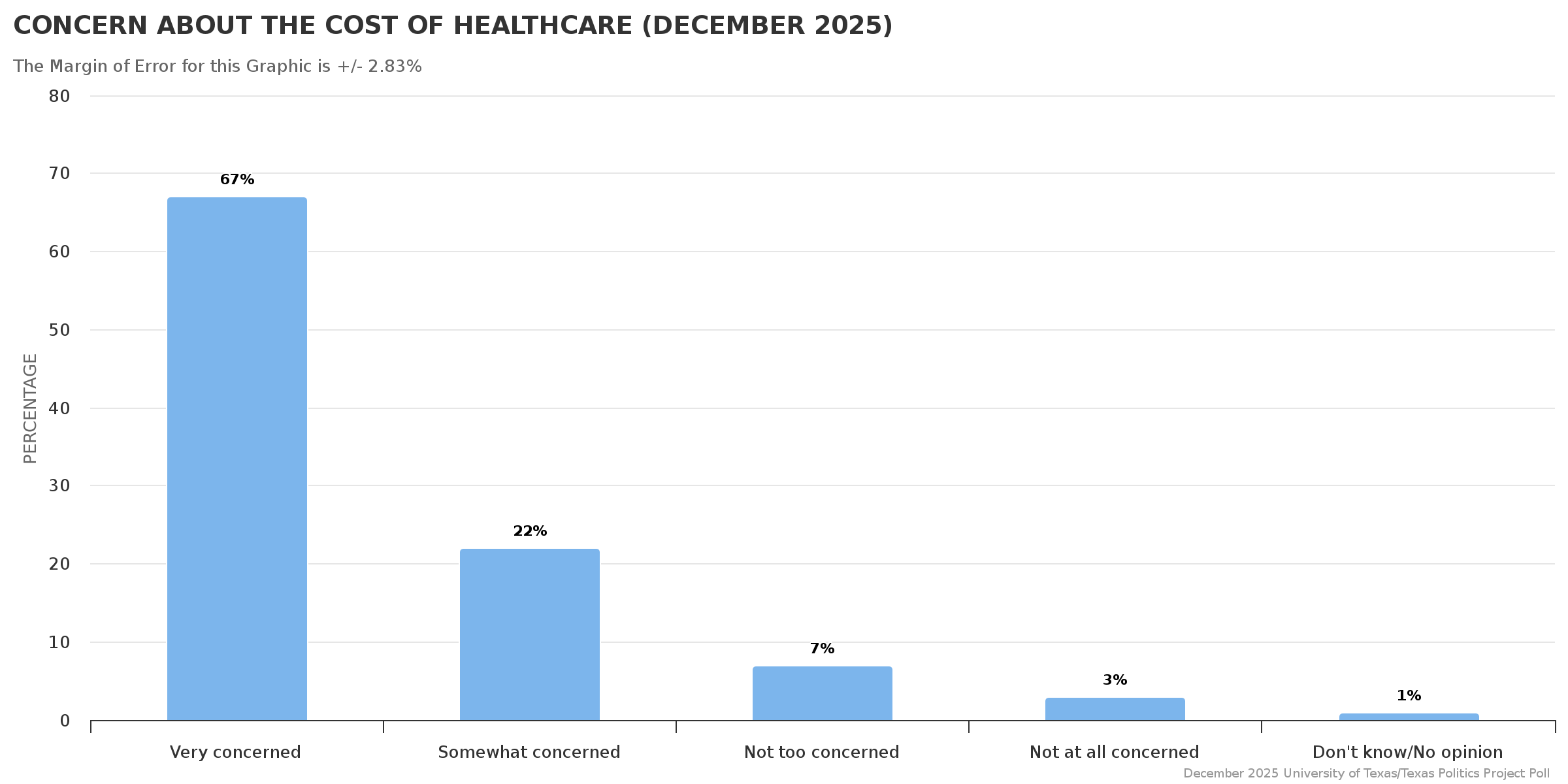
Concern about the cost of health care moved to the top of Texans’ economic concerns in the December 2025 poll, with 67% of voters reporting being "very concerned" about the cost of healthcare—the highest level of concern among all 13 economic issues tested.
Gen Z Didn’t Ask “Was It Legal?” They Asked “Does This Make Life Feel Less Stable?”
John Della Volpe, JDV on Gen Z
In the days leading up to the one-week mark of the U.S. action in Venezuela, we conducted 24 in-depth interviews with young people across race, gender, and political identity. We weren’t testing foreign-policy knowledge or partisan alignment. We were listening for something more basic: how this moment landed emotionally for a generation already living with instability, distrust, and institutional fatigue.

The Gender Gap Isn’t a Culture War
John Della Volpe, JDV on Gen Z
When you look closely—and when you actually listen—the Gen Z gender gap isn’t about ideology or identity. It’s about unequal expectations, unresolved norms, and mismatched experiences of power and responsibility. That is the emotional substrate beneath today’s political divide.

Support for abolishing ICE hits a new high
G. Elliott Morris, Strength In Numbers
Over the past year, the more people have seen of ICE, the more they have soured on it. The Trump administration’s tactics have horrified persuadable voters and made even some Republicans uncomfortable.

Baby boomers are turning 80
William H. Frey, Brookings Institution
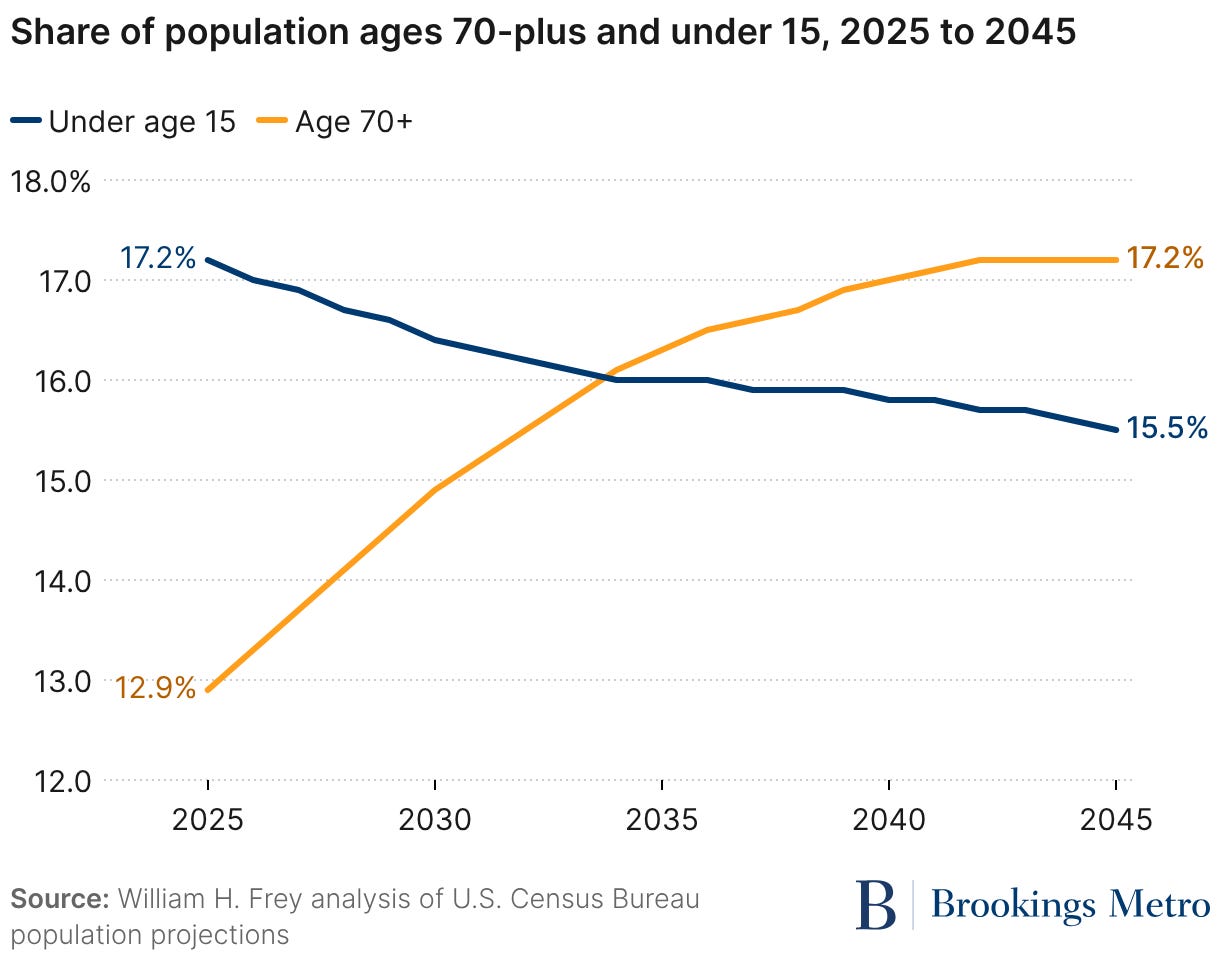
As of January 1, 2026, the nation’s first baby boomers have started to turn 80 years old. With baby boomers now entering a new decade, it’s worth looking back to understand how they compare to both the generations before and after them, as well as how their influence may change in the coming years.
America’s Statistical System Is Breaking Down
Molly Smith, Bloomberg [unlocked]
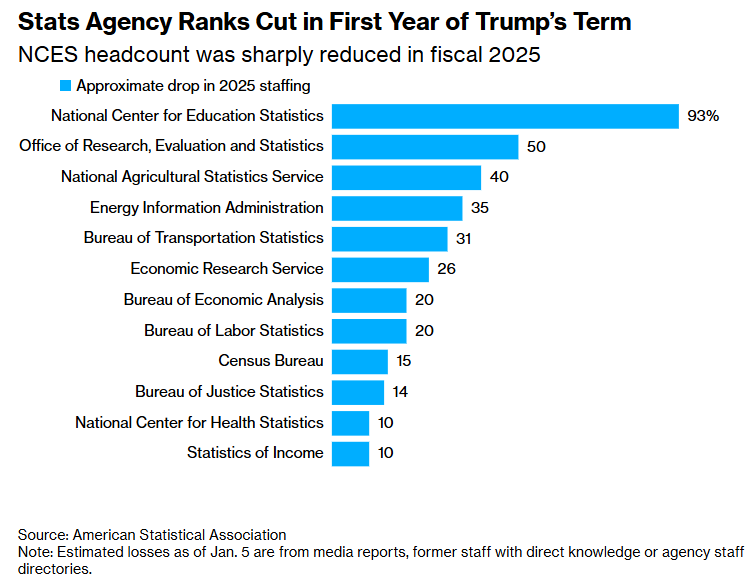
Canceled surveys, missing datasets and staffing cuts are leaving the US with growing blind spots — and weakening trust in official numbers.