Opinion Weekend
April 4-5, 2026
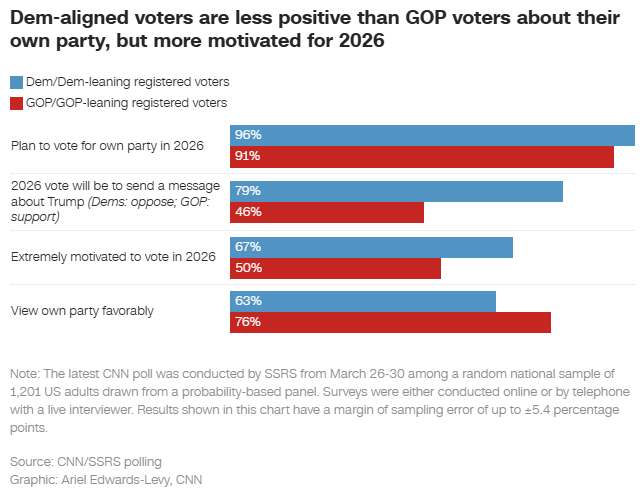
Many Americans are mad at both parties. Those ‘double haters’ favor the Democrats in the midterms
Ariel Edwards-Levy and Jennifer Agiesta, CNN
About one-quarter of the public holds a negative view of both parties – so-called double haters. Voters in that group prefer the Democrats in the upcoming midterms by 31 points. In an era characterized by negativity toward all sides in Washington, the voting patterns and preferences of people who have negative feelings toward both Democrats and Republicans can play a key role in elections.
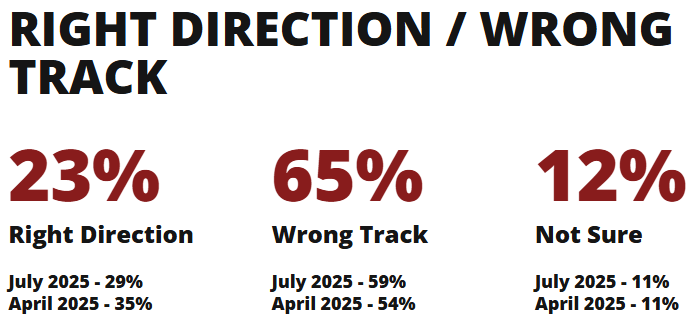
‘Bleak and Worsening:’ Less than 1 in 4 Americans Hold Positive Views of U.S. Economy, Direction of Country
University of Massachusetts Amherst Poll
Fewer than one-quarter of Americans view the U.S. economy in a positive light and the nation heading in the right direction, according to a new national University of Massachusetts Amherst Poll.
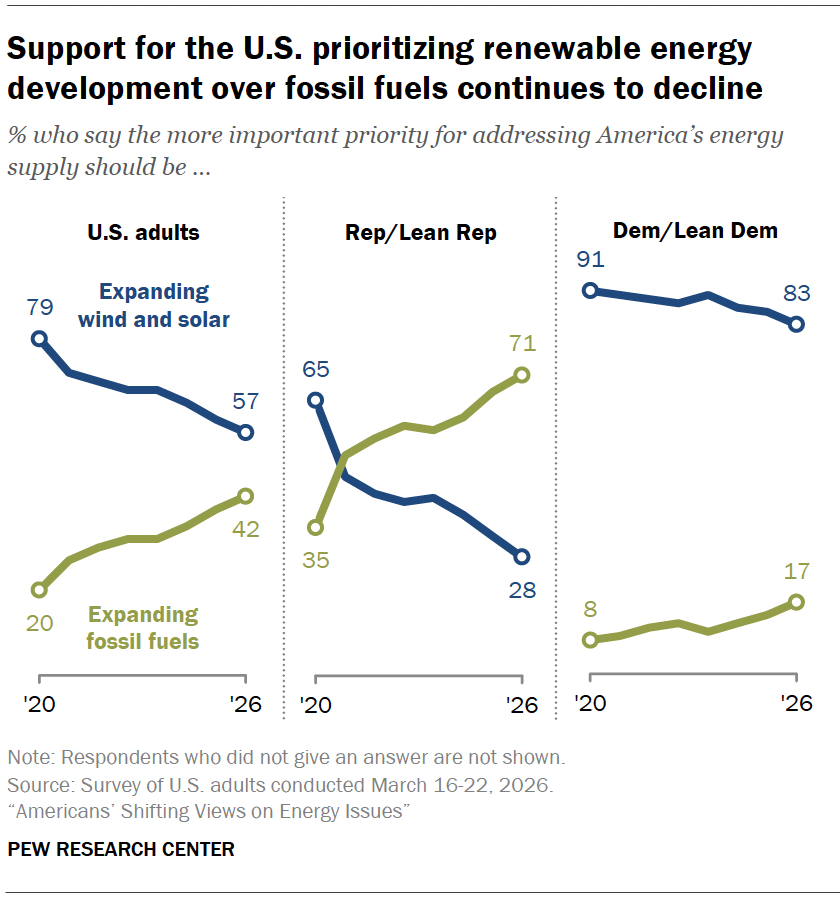
Americans’ Shifting Views on Energy Issues
Brian Kennedy and Emma Kikuchi, Pew Research Center
A year into the second Trump administration, Republicans continue to sour on wind and solar energy: A majority says the United States should prioritize fossil fuels like oil, coal and natural gas, a reversal of Republican views in 2020. Meanwhile, Democratic support for wind and solar power remains very high, but support is slightly lower than earlier this decade.
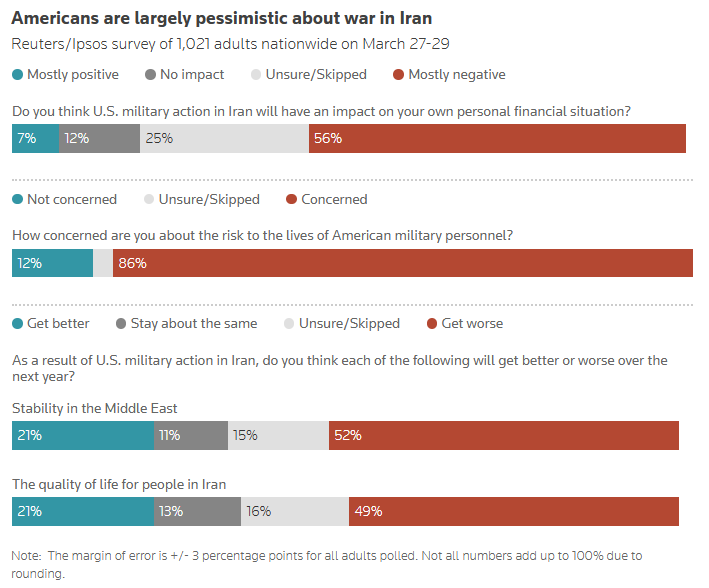
Americans have bleak views on Iran war, Reuters/Ipsos poll shows
Ben Kellerman, Reuters
Americans have a dim view of what the ongoing war means at home and in the Middle East, a recent Reuters/Ipsos poll shows.
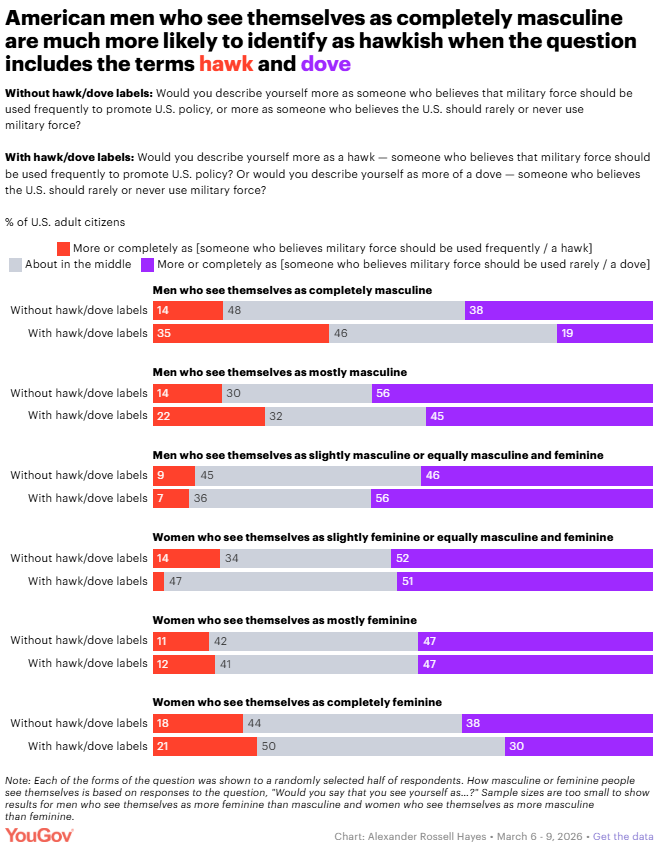
Men and Republicans are more likely to take hawkish positions when they come with the label 'hawk'
Alexander Rossell Hayes, YouGov
In discussions of foreign policy, hawks and doves often come up. YouGov has asked Americans if they think of themselves as hawks or doves in past surveys, and this phrasing has been used in other surveys of Americans dating back to the 1960s.... Does asking Americans to describe themselves as one of these two types of metaphorical birds lead them to answer differently than if we ask them about their policy preferences in the same way, but without the birds?