Opinion Today
May 18, 2026
Trump’s Approval Sinks Amid Unpopular War, Darkening G.O.P. Prospects
Lisa Lerer, Ruth Igielnik and Camille Baker, The New York Times [unlocked]
With the midterms nearing, President Trump’s approval rating has hit a second-term low as voters question his handling of the economy, according to the latest New York Times/Siena poll.
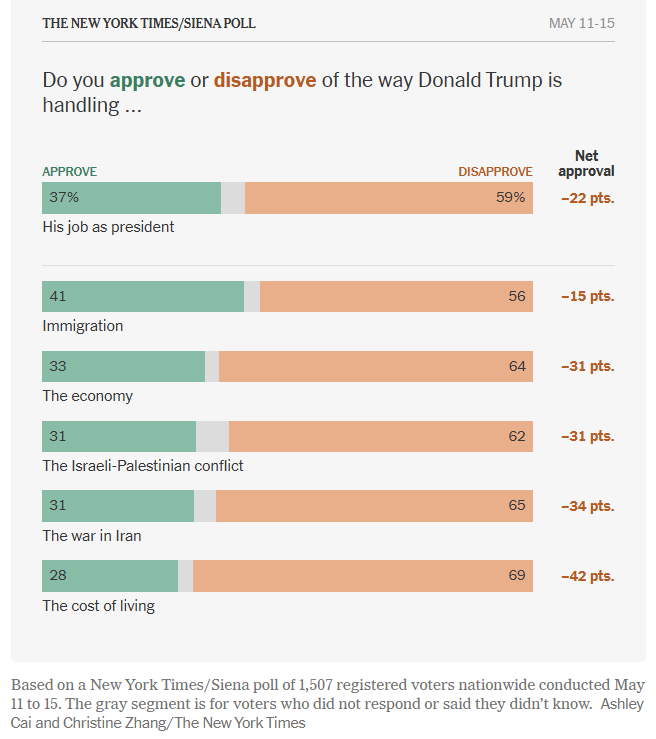
A Crack in the Polling Floor Puts Trump in New Territory
Nate Cohn, The New York Times [unlocked]
A 37 percent approval rating in a new Times/Siena poll suggests the G.O.P. is facing a big midterm problem despite recent redistricting gains.

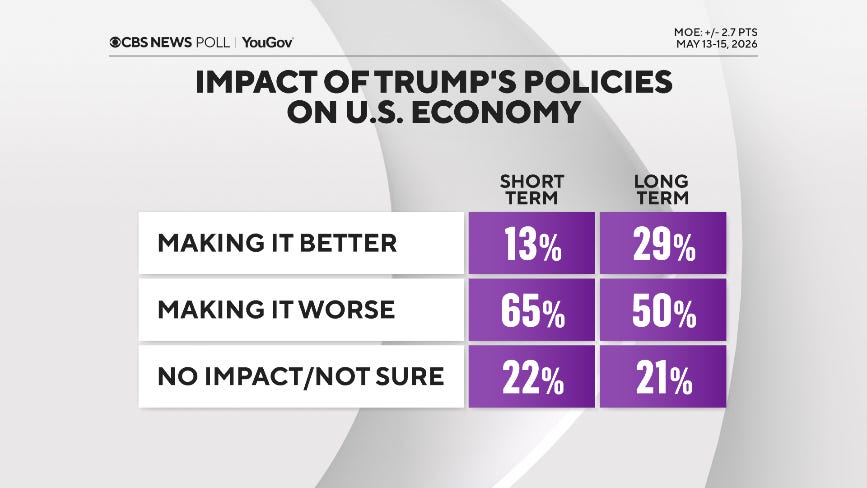
Stress, uncertainty as economy views decline; many voice frustration with Trump's economic approach, CBS News poll finds
Anthony Salvanto, Fred Backus and Jennifer De Pinto, CBS News
• Two-thirds of the country say the president's policies are making the economy worse, at least in the short term.
• Three-quarters of Americans say incomes aren't keeping up with inflation.
• A growing number feel opportunities are worse for them than for their parents' generation.
• Most people worry that AI will take jobs.
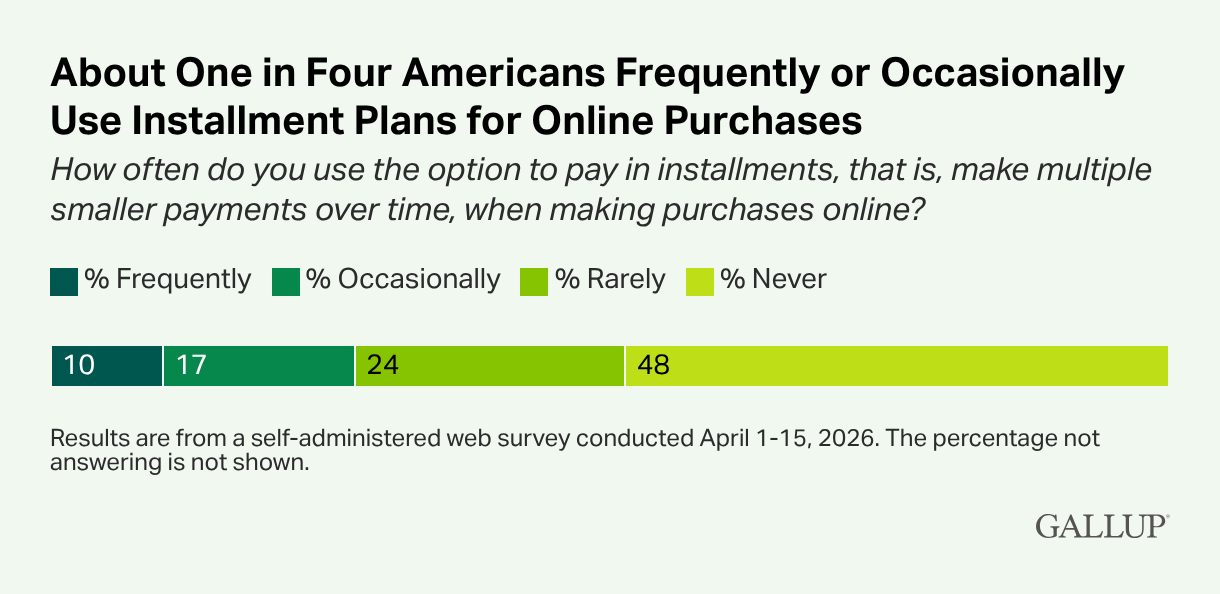
Buy Now, Pay Later in U.S. Shopping
Sarah Elizabeth Hogenboom-Jones, Gallup
About half of Americans have used an installment plan for an online purchase, but a smaller 27% make frequent or occasional use of these plans. Usage is more common among lower-income Americans and those who say they don’t have enough money to live comfortably.
How Opportunity Takes Root: Understanding the Conditions for People and Places to Thrive
The Walton Family Foundation
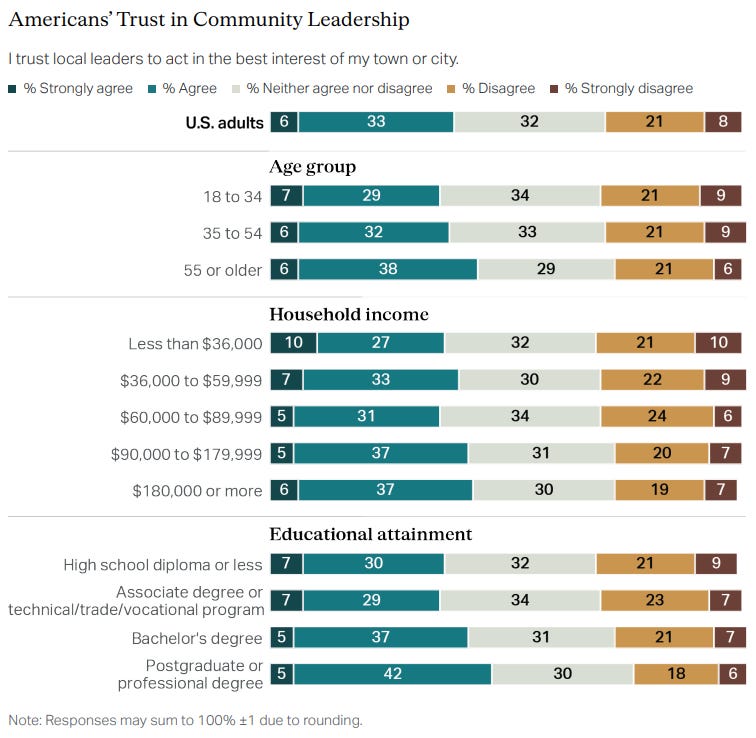
Where — and why — does opportunity flourish in the United States? This is the question driving new research conducted by Gallup and the Walton Family Foundation. Based on a nationally representative survey of nearly 7,000 U.S. adults, the study examines the concept of opportunity at both the individual and community levels.
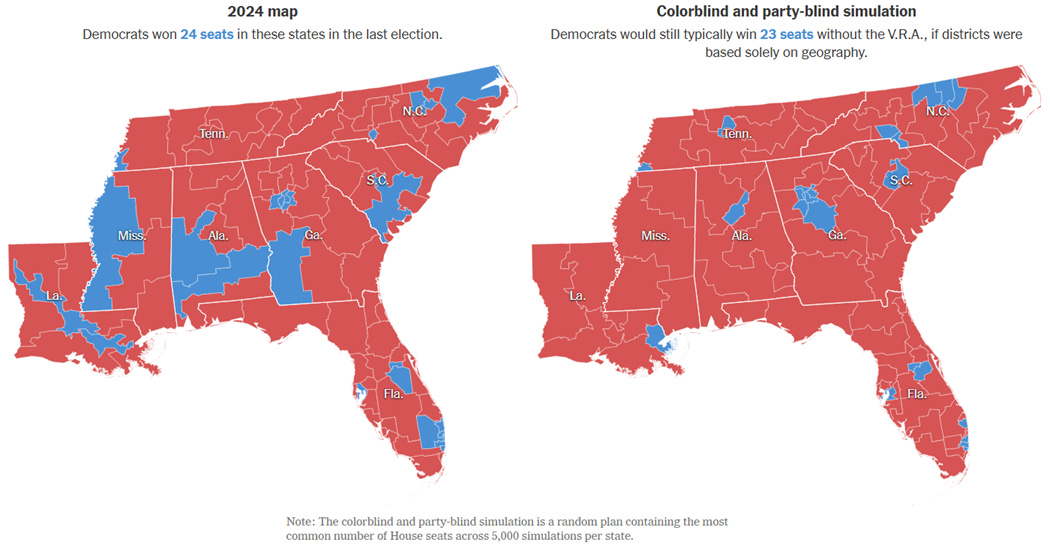
Why Neutral Maps Could Empower Black Voters as Much as the Voting Rights Act
Nate Cohn and Eve Washington, The New York Times [unlocked]
Our simulations debunk the notion that the act created artificial minority districts that wouldn’t otherwise exist.