Opinion Weekend
July 25-26, 2026
International survey: how people in seven countries see the US, power, threats and alliances
Matthew Smith, YouGov
With President Trump seemingly content for the US to take a less prominent role in global affairs, the world seems destined to move to a more multipolar order. With this in mind, a new YouGov study conducted from 17 June - 1 July 2026 in seven countries – Australia, Canada, France, Germany, Poland, the UK and the US – examines four broad themes on the current and future state of the world, and how they want their own relations with the US and other countries to look.

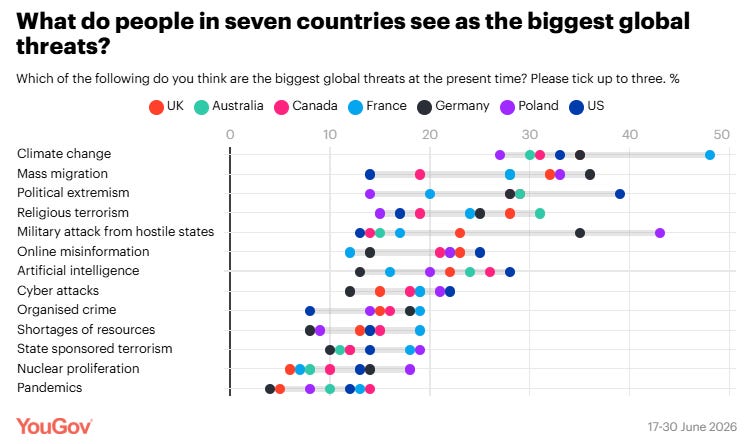
Global instability: what issues and countries do people see as the biggest threats?
Matthew Smith, YouGov
What issues do people see as the biggest global threats? Asked to pick up to three answers, climate change performed consistently highly, with no fewer than 27% picking it in any country.
NATO and national defence
Matthew Smith, YouGov
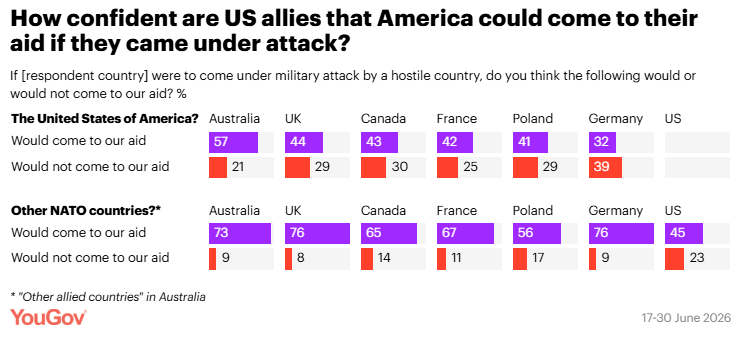
With NATO’s future increasingly called into question by the Trump administration, our survey shows that a majority of people in each country have a positive view of the institution, including in the US itself (55%).
Where do people think power lies in the world?
Matthew Smith, YouGov
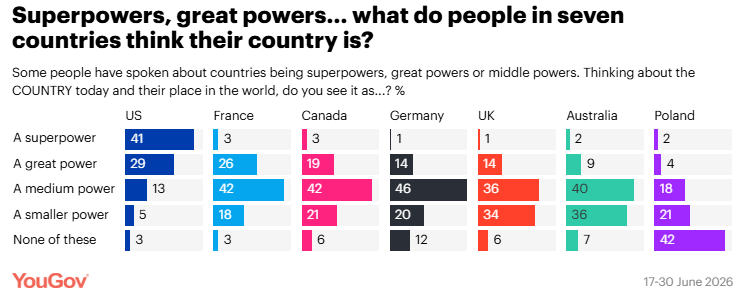
Where do people in our seven countries see their own country in terms of their own power, and who do they see as being the key global influencers in 20 years’ time?
Relations with the USA, and how America looks to the rest of the world
Matthew Smith, YouGov
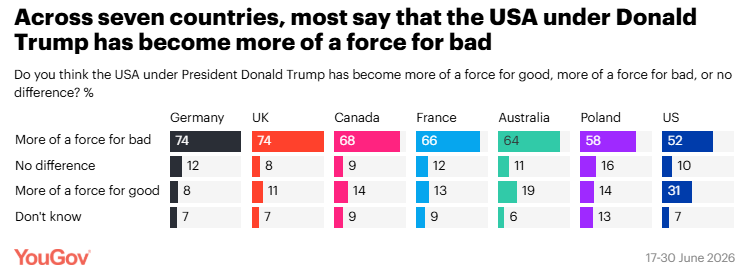
How do perceptions of US foreign policy look in other countries, and what does this mean for the kinds of relationship they would like to have with America?
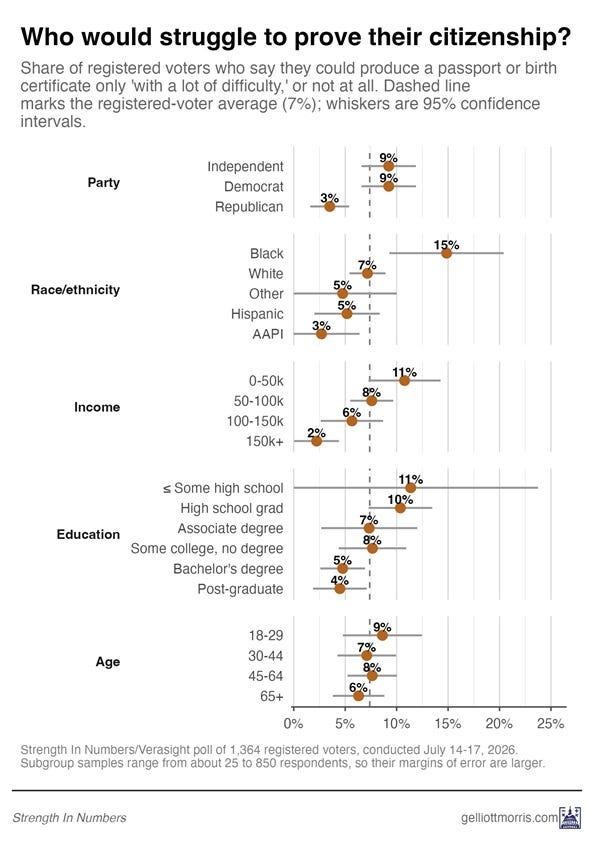
Poll: These Americans say they’d be disenfranchised by Trump’s election law
G. Elliott Morris, Strength In Numbers
Few Americans have heard a lot about the provisions of the SAVE Act. Support declines the more someone hears about it
Trump’s standing with the Republican base
Clifford Young, Ipsos
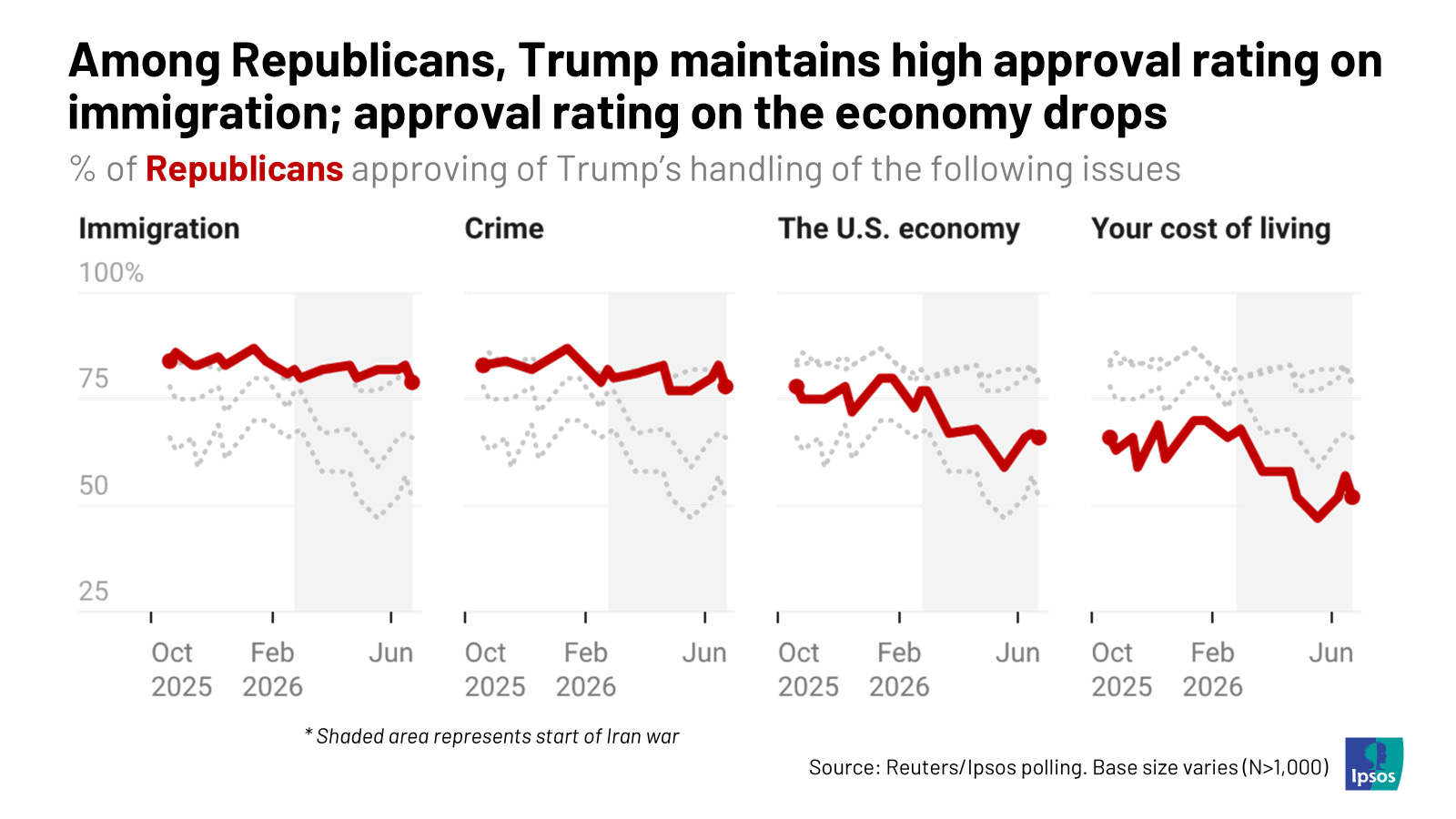
President Donald Trump’s approval ratings among Republicans haven’t moved that much over the past year. Twelve months ago, Republicans were united behind Trump. Today, they are still largely united behind the president. But under the hood, there are some signs of discontent.
Americans with disabilities are more likely than those without disabilities to say global warming is harming their health
The Yale Program on Climate Change Communication and the George Mason University Center for Climate Change Communication
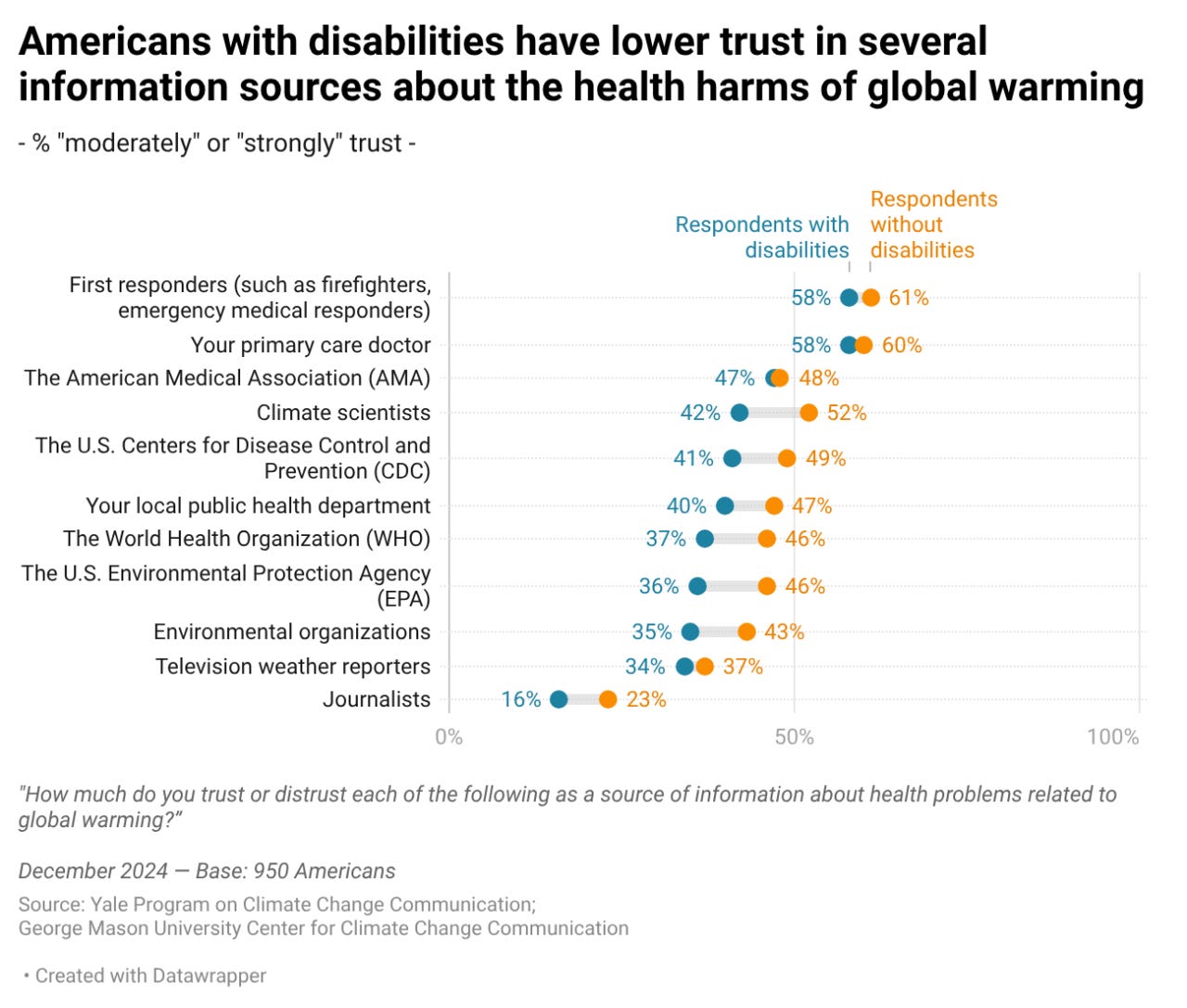
Americans with disabilities are more likely to think global warming is harming their own health than Americans without disabilities. Americans with disabilities have lower trust in several information sources about the health harms of global warming.
Hostility Against Local Officials Is Continuing at Elevated Levels in 2026, Disproportionately Impacting Women, Minority, and New Officeholders
Bridging Divides Initiative
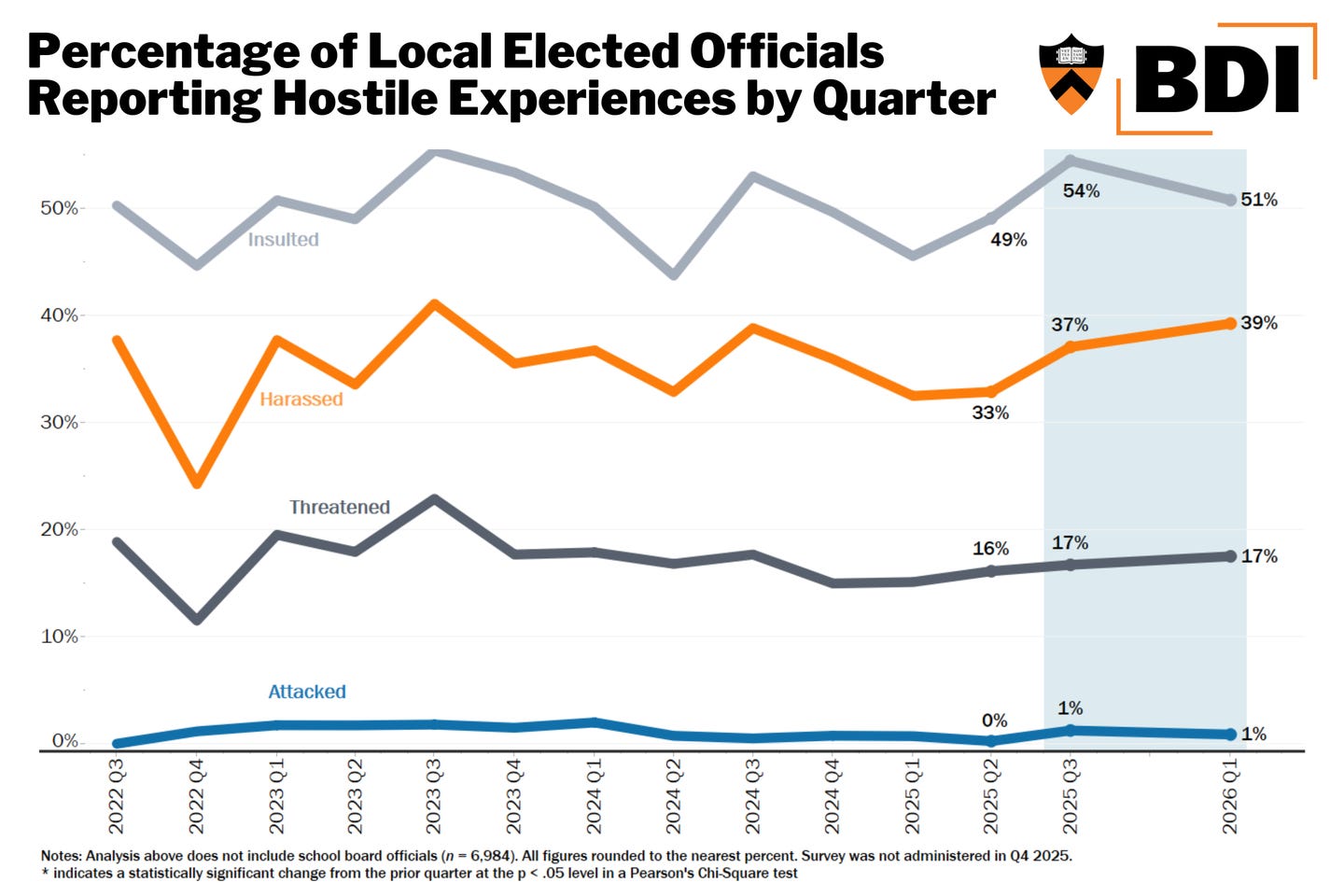
Based on responses from more than 460 officials during the first quarter of the year, the latest findings from the BDI-CivicPulse survey confirm that hostility remains unacceptably high: 54% of officials reported experiencing at least one form of hostility during the survey period, while 46% said they were worried about experiencing at least one form of hostility in the future.